Thanks Peter.
The cap demonstrated in the above videos is the 1st generation of the Greentek Gelfree cap. It's called the S1. I have recently started using the the S3 and hope to get some video demos done for youtube shortly. The price I think is more or less the same. The company (Bennie) is super friendly, so yes, I can recommend them.
Cheers, k
I recently tried to find out which is the easiest way to connect an EEG cap to a PC. On my search I found the method of Scott W Harden to connect a ECG sensor via a sound card to a PC:
I think this method should also work for EEG sensors. It is a bit of a problem using more than one sound cards in a PC. But there are to my knowledge two methods how to solve this problem.
1. use a Macintosh computer (a musician gave me this advice )
2. Matlab can deal with multiple sound cards. When this works with usb sound cards, things might become much more
easier.
But I ended up by coming to the conclusion, that the method from Scott W Harden for a stationary PC could be a solution to simplify the use of an EEG Cap by using multiple usb sound cards ( a sound card for each channel of EEG). If it works, neither a Cyton board, nor a Bitalino, nor a data aquisition card is needed for an EEG cap. Only a set of sound cards would be sufficient. This could be an easier and cheaper way to connect an EEG cap to a PC.
Kris, look forward to your Greentek S3 demo. Perhaps you could also summarize the improvements between S1 and S3.
Peter, thanks. Note however that ECG signals are millivolts range and EEG are microvolts. So the AD8232 chip used on the Harden article, would need to be swapped for one that is sensitive to EEG. (The Cyton does this with the ADS1299.) Or prefixed with Instrumentation Amplifiers that boost the signal level (the approach on Ganglion.)
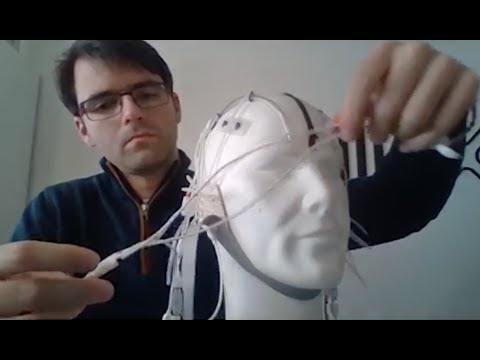
The positions of the electrodes of an EEG cap are clearly defined. Bitalino positiones the electodes of the EEG manually and measures out the position of each electrode by hand:
Greentek offers 4 sizes of the EEG cap with fixed positons of the EEG electrodes. Is this accuracy sufficient also for scientific studies?
All EEG caps are offered in different sizes. Caps are elastic, but have limited adaptation range. There are multiple online guides on how to measure the 10-20 site locations, here is another video,
re: combining Greentek electrodes with your own cap. No, the Greentek electrodes fit into specialized holders on their caps. These go together and are sold as the complete cap. I doubt they would dilute their business by selling separate components. The holders are sewn / fastened into the elastic cap material. And a wiring mesh is also part of the cap construction.
There are a wide range of saline based electrode systems, here are some results from Google Advanced Search here on the forum,
re: combining Greentek electrodes with your own cap. No, the Greentek electrodes fit into specialized holders on their caps. These go together and are sold as the complete cap. I doubt they would dilute their business by selling separate components. ...
Regards, William
Thank you for your answer, William
I doubt the market for EEG caps is big enough so that it can be diluted. Greentek sensor has to answer this question.
Peter, thanks. Note however that ECG signals are millivolts range and EEG are microvolts. So the AD8232 chip used on the Harden article, would need to be swapped for one that is sensitive to EEG.
I did not contact greenteksensor yet, but their website is quite interesting. For my needs, a Long-term EEG monitoring Cap which can be used up to 72 h without interruption is probably more suitable than a Gelfree Cap which can only be used for 2 hours without interruption. They come in 9 sizes so the accuracy should probably be enough also for scientific studies too. If necessary, they could be measured out manually, and stabilized with a second, rigid cap. To set it up seems not to be much more complicated than the Gelfree-S EEG Cap:
21 channel is standard, and custom channels can be ordered.
Since I m interested also in a second solution with an EEG headband with only 8 channels, I will still try to negotiate with Greentek sensors to get sensors separately, following Greentek Sensors slogan: "No compromise! It's the solution".
I did not yet negotiate with Greentek, let go of Greentek and meditate for the time being with my GARMIN watch. Still interested in long term EEG monitoring solutions from Greentek and products from Greentek Sensors, it s a long-term project.
Bennie Deng from Greentek Sensors commented on my question in his video in this youtube video channel:
. https://www.youtube.com/channel/UCSioH-IHQPi-RiXXlWn8yuw
.
Peter Gamma:
.
«Can individual EEG sensors be obtained separately from a cap from Greentek Sensors to build up an EEG cap up a to 256 channels?»
.
Bennie Deng from Greentek Sensors:
.
«Yes, individual EEG sensors can be obtained from Greentek. With these sensors, you can build up your own EEG Cap up to 128 channels. For caps with 256 channels, our standard EEG sensors are too big.»
Hofstädter Krisztián showed a rise of alpha waves when listening to music with the Greentek cap:
That s fine. But optimal would be a cap with 256 channels as Richard Davidson has used when he investigated tibetan buddhist monks when practising medtiation:
Hi Peter,
I think the alpha in the music video above mainly went up because of my eyes closed, however, it's one of my favourite tracks so the music could have caused some alpha related flow/trance state of mind - I am not really sure (yet).
I guess, if you have the money (resources) you could have 256 at home - but perhaps to begin with OpenBCI with 8 or 16 channels is good to start with as well. As far as I understand, serious neurofeedback work can be done with 1 or 2 channels (+ reference) only as well.
Cheers, k
Peter, many neurofeedback practitioners I am aware of, and have worked with, have done 2 channel neurofeedback with good results. The 256, 128, 64 channel EGI Geodesic Sensor net systems (your photo) cost MANY thousands of dollars.
If your goal is gamma synchrony, that can be done with two channels. The Davidson paper shows the areas they found highest concentration in the monks.
But more to the point, see the Youtube videos on Jeff Tarrant's Neuromeditation in this thread. He shows 2 channel protocols for each of the several styles of meditation.
Thank you, Wjcroft, for your detailed answer. Nothing against a 2 channel EEG setup. But I was impressed what Arnauld Delorme, EEGLAB developer from the Swartz Center for Computational Neuroscience can do with 4 channels when he compares data eyes closed versus data eyes open.
Is this not an entry experiment for meditation research? Prices for EEG hardware are dropping, EEGLAB is free. What is not free are the experts which can handle with this software.
Richard Davidson described the experiments he did in 2004 and the influence from Buddhist meditation practitioners a turning point in his life, and in meditation research. A simple setup of 4 channels is sufficient to demonstrate significant differences in brain waves when eyes are open vs when eyes are closed, was shown by Arnauld Delorme.
The Experiments Richard Davidson did in the LAB where very expensive and to mount 256 channels takes a lot of time. Which EEG setup is practical, realistic and meaningful for people who want to practise meditation at home?
I think the Greentek Geel Free cap is a comfortable and easy to use cap compared to other caps. But for doing experiments to see what happens when a subject listens to music or is practising meditation, is it not better to look at gamma wave oscillations in the prefrontal cortex, which Richard Davidson found? And can whe see gamma wave oscillations in the prefrontal cortex with a Greentek Geel Free cap?
I am sure it is a good idea to look at gamma (as well as other brainwaves) with a variety for classifications/feature extraction. I believe there is a variety of interesting brain-states that can be achieved with a variety of types of music and/or meditation.
Thank, Kris for the video. I think it is important to know what kind of signals or are looking for in the brain. Healing the mind with music, or healing the mind with meditation are very close to each other. I have listen a lot to Snatam Kaur Khalsa. She said that she is experiencing some kind of healing by chanting. I m sure she is the master over her Gamma waves in her brain. Now, I don t listen to music any more at all. It is forbitten for hard core meditators.
My last experiences with music where with Snatam Kaurs wake up festival. It was very uplifting. Now, I don t need Snatam Kaur anymore to uplift myself.
Kris, can you try to listen to Snatam Kaurs wake up festival and analyse what happens to your brain waves?
Great Kris, looking forward to it .
.
.
When you are interested in learning more about Richard Davidson and his studies about Gamma waves, whach his video where he talked at Google about his book " Altered Traits":
.
.
Richard Davidsons team investigated hard core meditators with a 256 channel setup when they where meditating. They found Gamma wave bursts when they had a spesific insight. It took a year to be sure, that these where no artefacts. I would be suprised, Kris, when you manage to see those bursts in your next session with your equipement.
Note that Jeff Tarrant's Neuromeditation research (see the Youtube links previously mentioned), has identified at least FOUR different styles of meditation. So Davidson's Buddhist monks were one variation. But in general there may be as many meditation styles and brainwave patterns, as there are meditation teachers.

Comments
Thanks Peter.
The cap demonstrated in the above videos is the 1st generation of the Greentek Gelfree cap. It's called the S1. I have recently started using the the S3 and hope to get some video demos done for youtube shortly. The price I think is more or less the same. The company (Bennie) is super friendly, so yes, I can recommend them.
Cheers, k
I recently tried to find out which is the easiest way to connect an EEG cap to a PC. On my search I found the method of Scott W Harden to connect a ECG sensor via a sound card to a PC:
https://www.swharden.com/wp/
I think this method should also work for EEG sensors. It is a bit of a problem using more than one sound cards in a PC. But there are to my knowledge two methods how to solve this problem. )
)
1. use a Macintosh computer (a musician gave me this advice
2. Matlab can deal with multiple sound cards. When this works with usb sound cards, things might become much more
easier.
https://ch.mathworks.com/help/daq/multichannel-audio-input-and-output-1.html
I started this topic in the eevblog here to find a mobile solution for an Adinstruments respiration sensor:
https://www.eevblog.com/forum/testgear/light-weight-usb-oscilloscope-with-matlab-support/
But I ended up by coming to the conclusion, that the method from Scott W Harden for a stationary PC could be a solution to simplify the use of an EEG Cap by using multiple usb sound cards ( a sound card for each channel of EEG). If it works, neither a Cyton board, nor a Bitalino, nor a data aquisition card is needed for an EEG cap. Only a set of sound cards would be sufficient. This could be an easier and cheaper way to connect an EEG cap to a PC.
Kris, look forward to your Greentek S3 demo. Perhaps you could also summarize the improvements between S1 and S3.
Peter, thanks. Note however that ECG signals are millivolts range and EEG are microvolts. So the AD8232 chip used on the Harden article, would need to be swapped for one that is sensitive to EEG. (The Cyton does this with the ADS1299.) Or prefixed with Instrumentation Amplifiers that boost the signal level (the approach on Ganglion.)
Regards, William
The positions of the electrodes of an EEG cap are clearly defined. Bitalino positiones the electodes of the EEG manually and measures out the position of each electrode by hand:
Greentek offers 4 sizes of the EEG cap with fixed positons of the EEG electrodes. Is this accuracy sufficient also for scientific studies?
What about this setup:
try to get gel-free electrodes from Greentek separately
mount it on a silicon cap according to the instruction from bitalino
Is the Silicon cap from Bitalino stable enough for everyday use? What about stabilizing the silcone cap from Bitalino with a
second cap like this?:
http://www.unimed-electrodes.co.uk/MULTICap-Cup--For-Use-With-Standard-EEG-Disc-Electrodes/299
Peter, hi.
All EEG caps are offered in different sizes. Caps are elastic, but have limited adaptation range. There are multiple online guides on how to measure the 10-20 site locations, here is another video,
http://openbci.com/forum/index.php?p=/discussion/176/placing-electrode-sensors-on-the-scalp
There are also template aids such as, BraiNet, but even these are in different sizes,
https://bio-medical.com/brainet-placement-caps.html
re: combining Greentek electrodes with your own cap. No, the Greentek electrodes fit into specialized holders on their caps. These go together and are sold as the complete cap. I doubt they would dilute their business by selling separate components. The holders are sewn / fastened into the elastic cap material. And a wiring mesh is also part of the cap construction.
There are a wide range of saline based electrode systems, here are some results from Google Advanced Search here on the forum,
https://www.google.com/search?as_q=saline&as_sitesearch=openbci.com
https://openbci.com/forum/index.php?p=/discussion/247/velcro-saline-sensor-headset
Regards, William
Thank you for your answer, William
I doubt the market for EEG caps is big enough so that it can be diluted. Greentek sensor has to answer this question.
http://www.greenteksensor.com/eeg-caps/
[email protected]
Let us know how they respond.
The idea of this project would be a simple one, not by swapping chips, but by replacing the ecg sensor in Scott W Hardens project by an EEG sensor like this one:
https://www.aliexpress.com/item/32999922405.html?spm=a2g0o.cart.0.0.206d3c00ENAMqV&mp=1
I did not contact greenteksensor yet, but their website is quite interesting. For my needs, a Long-term EEG monitoring Cap which can be used up to 72 h without interruption is probably more suitable than a Gelfree Cap which can only be used for 2 hours without interruption. They come in 9 sizes so the accuracy should probably be enough also for scientific studies too. If necessary, they could be measured out manually, and stabilized with a second, rigid cap. To set it up seems not to be much more complicated than the Gelfree-S EEG Cap:
http://www.greenteksensor.com/eeg-solutions/long-term-eeg-monitoring-solution/
21 channel is standard, and custom channels can be ordered.
Since I m interested also in a second solution with an EEG headband with only 8 channels, I will still try to negotiate with Greentek sensors to get sensors separately, following Greentek Sensors slogan: "No compromise! It's the solution".
I did not yet negotiate with Greentek, let go of Greentek and meditate for the time being with my GARMIN watch. Still interested in long term EEG monitoring solutions from Greentek and products from Greentek Sensors, it s a long-term project.
Greentek Sensors has a solution even for the smallest child:
.
https://www.youtube.com/channel/UCSioH-IHQPi-RiXXlWn8yuw
Bennie Deng from Greentek Sensors commented on my question in his video in this youtube video channel:
.
https://www.youtube.com/channel/UCSioH-IHQPi-RiXXlWn8yuw
.
Peter Gamma:
.
«Can individual EEG sensors be obtained separately from a cap from Greentek Sensors to build up an EEG cap up a to 256 channels?»
.
Bennie Deng from Greentek Sensors:
.
«Yes, individual EEG sensors can be obtained from Greentek. With these sensors, you can build up your own EEG Cap up to 128 channels. For caps with 256 channels, our standard EEG sensors are too big.»
Hofstädter Krisztián showed a rise of alpha waves when listening to music with the Greentek cap:
That s fine. But optimal would be a cap with 256 channels as Richard Davidson has used when he investigated tibetan buddhist monks when practising medtiation:
https://www.ncbi.nlm.nih.gov/pmc/articles/PMC526201/
And self-induced high-amplitude gamma synchrony should be observed during mental practice. But can this be done at home?
here is shown how to assemble a cap with 256 channels.
Hi Peter,
I think the alpha in the music video above mainly went up because of my eyes closed, however, it's one of my favourite tracks so the music could have caused some alpha related flow/trance state of mind - I am not really sure (yet).
I guess, if you have the money (resources) you could have 256 at home - but perhaps to begin with OpenBCI with 8 or 16 channels is good to start with as well. As far as I understand, serious neurofeedback work can be done with 1 or 2 channels (+ reference) only as well.
Cheers, k
You are wrong. Serious neurofeedback starts with 4 channel EEG comparing brain data when eyes are closed vs when eyes are open:
.
.
Peter, many neurofeedback practitioners I am aware of, and have worked with, have done 2 channel neurofeedback with good results. The 256, 128, 64 channel EGI Geodesic Sensor net systems (your photo) cost MANY thousands of dollars.
https://www.egi.com/
If your goal is gamma synchrony, that can be done with two channels. The Davidson paper shows the areas they found highest concentration in the monks.
But more to the point, see the Youtube videos on Jeff Tarrant's Neuromeditation in this thread. He shows 2 channel protocols for each of the several styles of meditation.
https://openbci.com/forum/index.php?p=/discussion/1348/collaborate-with-me-on-neurofeedback-project-to-train-jhana-concentration-meditation-states
Regards, William
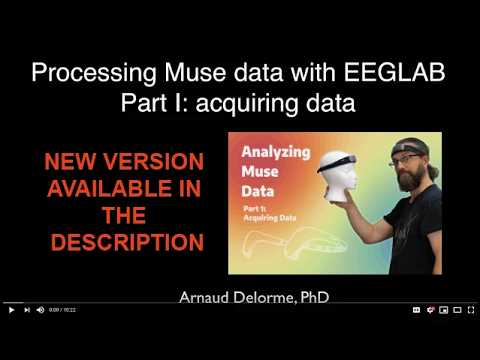
Thank you, Wjcroft, for your detailed answer. Nothing against a 2 channel EEG setup. But I was impressed what Arnauld Delorme, EEGLAB developer from the Swartz Center for Computational Neuroscience can do with 4 channels when he compares data eyes closed versus data eyes open.
Is this not an entry experiment for meditation research? Prices for EEG hardware are dropping, EEGLAB is free. What is not free are the experts which can handle with this software.
Richard Davidson described the experiments he did in 2004 and the influence from Buddhist meditation practitioners a turning point in his life, and in meditation research. A simple setup of 4 channels is sufficient to demonstrate significant differences in brain waves when eyes are open vs when eyes are closed, was shown by Arnauld Delorme.
The Experiments Richard Davidson did in the LAB where very expensive and to mount 256 channels takes a lot of time. Which EEG setup is practical, realistic and meaningful for people who want to practise meditation at home?
I think the Greentek Geel Free cap is a comfortable and easy to use cap compared to other caps. But for doing experiments to see what happens when a subject listens to music or is practising meditation, is it not better to look at gamma wave oscillations in the prefrontal cortex, which Richard Davidson found? And can whe see gamma wave oscillations in the prefrontal cortex with a Greentek Geel Free cap?
Hi Peter,
I am sure it is a good idea to look at gamma (as well as other brainwaves) with a variety for classifications/feature extraction. I believe there is a variety of interesting brain-states that can be achieved with a variety of types of music and/or meditation.
Best wishes, k
Hi Peter,
this might interest you:
Cheers, k
Thank, Kris for the video. I think it is important to know what kind of signals or are looking for in the brain. Healing the mind with music, or healing the mind with meditation are very close to each other. I have listen a lot to Snatam Kaur Khalsa. She said that she is experiencing some kind of healing by chanting. I m sure she is the master over her Gamma waves in her brain. Now, I don t listen to music any more at all. It is forbitten for hard core meditators.
As a last resort, you could turn to John Cage : 4'33
My last experiences with music where with Snatam Kaurs wake up festival. It was very uplifting. Now, I don t need Snatam Kaur anymore to uplift myself.
Kris, can you try to listen to Snatam Kaurs wake up festival and analyse what happens to your brain waves?
https://ok.ru/video/17548970611
My hypothesis is that you should observe a slow rise in gamma wave oscillations in the prefrontal cortex.
Snatam Kaur or another kind of music which lifts you up.
great, thanks Peter. I will give it a go next time I have the kit together.
Great Kris, looking forward to it .
.
.
.
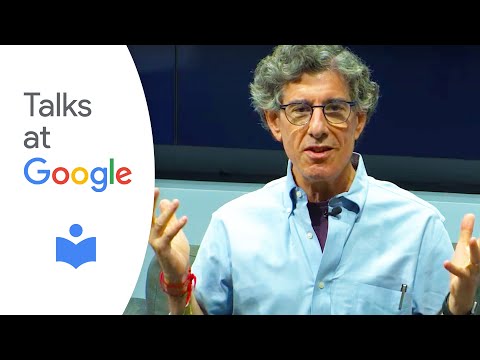
When you are interested in learning more about Richard Davidson and his studies about Gamma waves, whach his video where he talked at Google about his book " Altered Traits":
.
.
Richard Davidsons team investigated hard core meditators with a 256 channel setup when they where meditating. They found Gamma wave bursts when they had a spesific insight. It took a year to be sure, that these where no artefacts. I would be suprised, Kris, when you manage to see those bursts in your next session with your equipement.
Note that Jeff Tarrant's Neuromeditation research (see the Youtube links previously mentioned), has identified at least FOUR different styles of meditation. So Davidson's Buddhist monks were one variation. But in general there may be as many meditation styles and brainwave patterns, as there are meditation teachers.
https://www.neuromeditationinstitute.com/
Good to know, wjcroft, thanks.
Richard Davidson also demonstrated that Well-Being is a Skill:
https://centerhealthyminds.org/join-the-movement/why-well-being-is-skill
Can you reproduce this with your cap, Kris?