
two pins per channel? / simultaneous EEG with EMG, EOG or ECG
 DashBarkHuss
Chicago
DashBarkHuss
Chicago
I thought you can connect more than one electrode per channel.
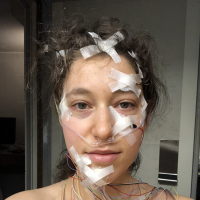
Example: in the sleep lab I volunteer at they connect two electrodes to my occipital lobe area but call it one channel. In EOG you use two electrodes (one per temple) but it's still considered one channel.
But the ganglion looks like it only has one electrode connection per channel. So it seems like you can't connect more than one electrode per channel.
Am I completely off about multiple electrodes per channel or am I misunderstanding the connections on the ganglion?
BTW I'm a slight newb. I'm used to working with backyard brains and these details are obscured by their easy to use kit
Comments
Hi Dash,
Both Ganglion and Cyton can use the plus and minus pins (on each channel) to allow each channel to have a separate reference. By default for EEG operation, this is not the case. And instead they use a single pin as reference for all channels. But for EOG and EMG it is common to use both pins per channel.
On Ganglion there are switches for each channel to set for either common reference (for EEG) or differential (for EMG / EOG). So you just want to flip the switches for the differential channels you wish, then use both plus and minus pins for those channels.
https://docs.openbci.com/Ganglion/GanglionSpecs/#inverting-input-select-switches
Also see these tutorials:
https://docs.openbci.com/GettingStarted/Biosensing-Setups/EMGSetup/
https://docs.openbci.com/GettingStarted/Biosensing-Setups/EEGSetup/
William
Also, saw your profile about lucid dreaming and your setup with the Arduino / shield and detecting REM eye movement (with left / right EOG at the temples). What has been your success rate with that? Can you reliably induce lucidity in your sleep? How many times per week does that work? Do you sleep with this every night?
In the distant past I used Stephen LaBerge's original Nova Dreamer device. (Just had it for a week rental.) Frankly the wires interfered so much with my sleeping, that I never got any results. There have been several web sites tracking the introduction of new devices, but most of them get pretty poor reviews. And some outright scams, fakery. Your approach with the eye movements alone can be compared with others tracking the actual EEG, plus EOG.
Saw your info on the morse code signaling with the eye movements. While similar work has resulted in research publications, I would doubt that it would be helpful to an individual lucid dreamer as far as advancing they proficiency.
Regards,
Thanks will check out the tutorials!
It sucked because it couldn't tell the difference between EOG when awake vs REM. It would go off in the middle of the night when I'd wake up and was jarring. So I added EMG (no emg + yes eog == REM). But haven't been able to test it a lot lately after adding EMG.
I have tried similar masks but didn't like them either much. And some are based on complete bad science (Voss 40hz study). But I'm a study participant at Northwestern and their set up works for me. It's similar to the mask but the room lights up which I find more comfortable. Also a real person is fiddling with the lights and doing it to your specific biosignals. So it's way better. They're not just looking at REM but other ways of optimizing the perfect light trigger. I want to package up what they are doing into my own home lab.
I was in those publications! The reason I'm interested in lucid dream communication myself is not so much for advancing proficiency, although there's an aspect of this I do want to explore. But I'm interested in that part because I think it's cool.
Can I measure EMG with common reference settings? I tried to measure EEG and EMG same time with a ganglion device.
See this doc on simultaneous ExG. You can use similar ideas with Ganglion, although the doc is geared towards Cyton. Just set the EMG channels to use differential mode. You don't want to use EMG with the common REF, as that will mess up the EEG, which is using the REF.
https://docs.openbci.com/GettingStarted/Biosensing-Setups/ExGSetup/
Thank you @wjcroft a lot.
So I should follow the EMG tutorial for both EOG and EMG?
Yes. EOG is just EMG based on the muscles around the eyes. All EMG sensing is done in pairs of electrodes, surrounding the muscles. Because when firing, the muscles polarize electrically. So the conclusion using Ganglion, is that you set the switches for differential mode and use a placement similar to this:
https://openbci.com/forum/index.php?p=/discussion/comment/17670/#Comment_17670
thank you @wjcroft!
What would be the main difference for the ganglion? @wjcroft
I'd be doing two emg (one is eog) and two eeg.
EEG
Would the equivalent of the Cyton
SRBbeREF(top pin) on the Ganglion and the equivalent for the CytonBIASbeD_G(top pin) on the Ganglion?Referenced here for EEG on ganglion
EMG
Would the equivalent of the Cyton
AGNDbe the bottomD_Gpin (Driven Ground) on the Ganglion?Referenced here for EMG on ganglion
On Ganglion your EEG channels use the top pin for scalp, and REF pin for your reference electrode. Switch is set to common reference mode. Ground connection on D_G.
For EMG, turn switch to differential mode, use both plus and minus pins on each channel.