Or, to ask more clearly. Did you meditate with your cap, and see, what happens to your brainwaves? For instance, compare your brainwaves, when you are anxious and depressed, to the brainwaves, when you are happy and you are feeling well, as Mathieu Ricard expains in his video, who did also experiments with Richard Davidson?
The first neurofeedback protocol I used with OpenBCI in SuperCollider tried to increase theta waves with non traditional shamanic drumming inspired by the REI methods (Jeff Strong). I haven't managed to analyse the raw data in Matlab yet, the only thing I have is plotting my extra AUX data from the raw EEG file. Something like this:
red: manually set neurofeedback threshold
grey: averaged theta on FZ
blue: soundscape level lengths
green: indicates theta rewards
The idea above was to use one of the Mindfulness NeuroMeditation protocols (that use an inhibitor or an indicator on gamma at PZ), but, I didn't manage to code that part before the experiments.
I think Jeff Tarrant's work on meditation with neurofeedback is great and I think he references Davidson's work often. Meditation seems to be a much more complex topic than what I thought initially. I have good results with simply doing a 10 minute Wim Hof breathing.
Yes, I used to record the EEG of most of my experiments with music, breathing, live drumming or hemi-sync, but that was before the lock-down, when I had a quiet house to play. Now, it's more difficult to do BCI at home for people where children randomly open the door of the study
I would suggest almost any other meditation teacher, for those interested in learning/starting. Jeff Tarrant's (Neuromeditation) material is excellent and allows you to choose a style of meditation that fits your personality. Tarrant's two channel neurofeedback protocols are also easy to set up.
I know Osho was controversial. That doesn't change anything about the fact, that this instructional video was helpful to me personally and worth watching, and was worth watchting for 1.794.807 other as well.
@Kris. I m not a member of the Osho community, and don t want to become one either. But I find his instructional video how to obtain complete inner peace instantaneously extraordinary. There was once a video on youtube when Osho was teaching breath meditation. He described practising breath meditation, then he slept in. An when he woke up in the morning he was still meditating. This was also extraordinary and striking.
Hi Peter, I think I understand what you mean. I remember some of his books being insightful. I also enjoyed listening to David Lynch, Alan Watts, etc. talking about meditation. I often think it's good to hear how different people interpret the same thing differently.
Osho was controversial. For me personally, most convincing are tibetan buddhist meditation practises.
An instruction for a meditation which is non controversial and not doubted about by scientists is the tibetan buddhist meditation partice Samatha meditation without an object
And here my question: Did you ever a meditation for calming the mind, for instance Wim Hofs, or another kind of practise with your Greentek cap and see what is happening to your brainwaves?
And do you think the Greentek cap is a practical cap to use is as a daily tool for practising meditation?
Did you ever a meditation for calming the mind, for instance Wim Hofs, or another kind of practise with your Greentek cap and see what is happening to your brainwaves?
The last few times I recorded EEG while listening to MONOLIT [https://nimetu.bandcamp.com/album/monolit.], I did the composer's breathing exercises before the listening. I didn't analyse the data yet.
And do you think the Greentek cap is a practical cap to use is as a daily tool for practising meditation?
Well, it takes a while to setup. I have been recording 8 channels lately, which needs 10 electrodes. If your electrodes are soaked, putting them in the cap, adding extra water when working on reducing impedance can take between 10-20 minutes. Then you also have to take the tool apart, wash the electrodes and sometimes the cap as well. But, it's probably better data than what Neurosky or Muse could give you. I guess if you have dry or gel electrodes the setup is much faster, however, I am not sure about how much worse/better their signals are. With this Greentek cap, when sitting while recording the impedance usually stays below 10 kOhms, however, when I lay down, the impedance at the end of the sessions is higher. This has probably something to do with gravity pulling the salty water to a direction that sometimes is not aligned with the connections in the cap. Not sure yet. In general I am happy with the cap, customer service (Bennie) is really helpful. But, I haven't used many other caps/devices so I can't say it's the best for the money.
Thank you for your detailed answer. 10 - 20 min is a lot of time for a daily routine. But when you are the Dalai Lama who meditates between 3 - 4 hours daily, it may be worth it. And also for a scientist. But to start with, a Muse headband might be sufficient. I especially love the instruction Arnauld Delorme gave to use EEGLAB with the Muse headband. He showed, what is possible with such a simple device as the Muse headband. Using the same tools with a Greentek cap is probably the best you can get at the moment for home users, at a price which is affordable.
Thanks. Actually, I have no real idea of how good/bad the Muse signal is. I think I like the idea of OpenBCI more because you have more channels and can choose the electrode locations.
According to my own little experience, for practising meditation, a cap with 256 channel eeg should be choosen, whenever possible. Costs for hardware and software have dropped. To be able to compare the results to the results found by scientists who do meditation research, where a 256 channel setup is standard.
Price listed on this page for the 256 channel EGI geodesic saline head-mesh system, $270,000. Total grant value. I'm guessing the EGI system itself is probably closer to $170K.
Dr. Jeff Tarrant shows a number of different Neuromeditation protocols that only require two channels. These can be easily setup with programs like BrainBay, BioEra, neuromore, Bioexplorer, NeuroPype, OpenViBE...
Biosemi price list. A 256 channel system will be well over $80,000. But note, injecting gel in 256 holes in such a cap would take probably close to an hour. Which is why the EGI systems are easier to use. With that headset you dip the net in a bucket of saline solution, and sponges in each electrode, become conductive. Speeding application.
The Neurosky TGAM module is ONE channel, and connects via a Bluetooth module to (for example) an arduino. It does not work with a usb sound card. There are a few TGAMs available on eBay and other resellers, but Neurosky no longer sells them; that's my impression. So product appears to be deprecated.
EEG caps with 256 channels are very expensive, and only useful with EEG amplifiers costing $80K and up. It would be impossible to hook up 256 TGAM modules, the cabling would be absurd. And at a $35 TGAM price * 256, that equals $9,000. Each TGAM needs a separate Bluetooth connection, and Bluetooth radio bandwidth cannot serve even a fraction of that number of simultaneous radio links.
Thank you, Wilcroft, for your detailed answer. I think when someone has the goal to build up a low cost high quality 256 channel system not for scientific purposes, but for meditation practice, it should be possible. But such systems have to be developed first, and it is necessary to find out what can be done with such a low cost high quality systems.
Here a picture of Arnauld Delorme wearing a contemporary 256 channel EEG cap. It looks like sort of a swimming cap, I suppose they are tailor made for each person. Prices for laser scanning and 3 printing methods are dropping, and therefore also prices for tailor made 256 channel EEG caps.
@Kris Hofstadter: When you study closely the results of Richard Davidson and Mathieu Ricard, you should compare your brain waves when you are listening to “Voski Marble – Sadness” to your brainwaves, when you are listening to “Alexis Jordan – Happiness”:
with your Gel-free Greentek cap. The result would be very interesting.
Yes, that would be great. Compare Gamma wave actitity in the prefrontal cortex left hemisphere versus right hemisphere when you listening to music which makes you sad versus Gamma wave activity left versus right hemisphere when you listening to music which makes you happy. It is all explained in Richard Davidons papers. But there are also youtube contributions of Richard Davidson and Mathieu Ricard which are a little bit easier to understand. The topic how to optain and measure a happy, healthy and wholy mind would be great for OpenBCI, to use it as an assistant for practising yoga and meditation. But I suppose this could be done better with more than 32 channels.
Yes, for me personally an interesting project, and I suppose also for technology orientited musicians, yogis, and meditators. But also a sophisticated project. Don t forget, the meditators Ricardard Davidson investigated spent four hours meditating with EEG sensors and fmri. So, you must listen to 4 our hours of sad music and then listen to 4 hours of happy music and compare the data. I m a bit sceptical whether this works. But still an interesting project for the future. At least for meditators.
The time window of four hours is not accidentally. Great masters of yoga and meditation recommend four hours of daily practice. The Dalai Lama mendioned once to meditate four hours a day, Thich Nhat Hahn recommends four hours a day, and Yogi Bhajan recommends two hours in the morining and two hours in the evening of practise. For serious work, do it four hours a day.
Sad/happy music is a bit subjective and perhaps while meditation (ideally) you are more in an objective mindset.
I guess it's not difficult to meditate for 4 hours if you can do it while walking, cycling even working... it depends how you define meditation, there are many different types.
Maybe I should read/watch these videos before commenting
Yes. But also in Kundalini Yoga for instance, Mantra singing is used to uplift yourself. But not always the same Mantra is used. A Mantra is necessary which fits to your mood, and then change it according to your shift of your mood.
You use your gelfree Greentek cap also over night. Did you get good recordings with it? When I remember right, according to the instructions of Greeentek, one setup of the gelfree cap works for for hours. Greentek has alternatively a long term EEG cap which uses gel which can last up to three days.
Snatam Kaur is a specialist for this kind of Mantra singing. Her music is so good so that you can listen to her music four hours a day and simultaneously record your brain waves. She said she is healing herselve with Mantra singing.
If you can t reproduce Richard Davidsons experiments, and don t see any Gamma wave changes in the prefrontal cortex, build your own do it yourself gelfree Greentek cap with 128 EEG sensors, which can be obtained separately from Greentek, and a 128 usb sound card data aquisition system, derived from Scott Hardens sound card ECG, and repeat the experiments. Maybe I participate sooner or later.

Comments
Or, to ask more clearly. Did you meditate with your cap, and see, what happens to your brainwaves? For instance, compare your brainwaves, when you are anxious and depressed, to the brainwaves, when you are happy and you are feeling well, as Mathieu Ricard expains in his video, who did also experiments with Richard Davidson?
Thanks Peter,
The first neurofeedback protocol I used with OpenBCI in SuperCollider tried to increase theta waves with non traditional shamanic drumming inspired by the REI methods (Jeff Strong). I haven't managed to analyse the raw data in Matlab yet, the only thing I have is plotting my extra AUX data from the raw EEG file. Something like this:
red: manually set neurofeedback threshold
grey: averaged theta on FZ
blue: soundscape level lengths
green: indicates theta rewards
The idea above was to use one of the Mindfulness NeuroMeditation protocols (that use an inhibitor or an indicator on gamma at PZ), but, I didn't manage to code that part before the experiments.
I had good results with the music either being generated live with the BCI (https://github.com/krisztian-hofstadter-tedor/OpenBCI-SuperCollider with https://github.com/krisztian-hofstadter-tedor/bcmi-soundscape-01) or simply by playing it from an audio file (https://tedor.bandcamp.com/album/shamanic-soundscape-level-two or https://www.surveymonkey.co.uk/r/shamanic-obcif). I guess by good results I mean that I managed to dive into a trance like state where visuals after around 10-14 minutes became fluid. At the beginning of the 'meditation' the visuals were mainly controlled by me, after the 'breakthrough' around 10-14 minutes, the visuals seemed to flow without my will. I managed to replicate these very interesting experiences with my live drumming only and listening to other types of music as well e.g. https://nimetu.bandcamp.com/album/monolit.
More recently, I started looking into creating a protocol based on this [https://www.tandfonline.com/doi/full/10.1080/23311908.2017.1313522] research. But, due to the lockdown, I didn't manage to perform with it :
I think Jeff Tarrant's work on meditation with neurofeedback is great and I think he references Davidson's work often. Meditation seems to be a much more complex topic than what I thought initially. I have good results with simply doing a 10 minute Wim Hof breathing.
Yes, I used to record the EEG of most of my experiments with music, breathing, live drumming or hemi-sync, but that was before the lock-down, when I had a quiet house to play. Now, it's more difficult to do BCI at home for people where children randomly open the door of the study
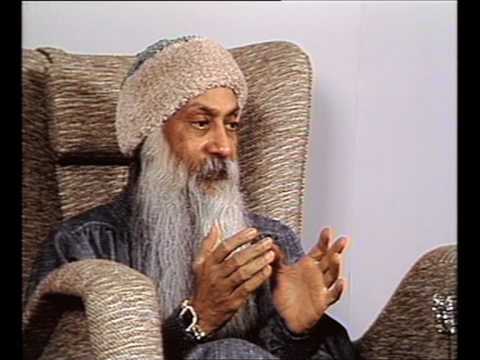
Very impressive. Did you also try this simple meditation from Osho?
.
Thanks Peter,
does not sound that simple to me :-)
After watching 'Wild Wild Country' I think my interest in Osho has faded a bit.
Osho (Bhagwan Shri Rajneesh), is a hugely polarizing figure. And long gone now.
https://en.wikipedia.org/wiki/Rajneesh
I would suggest almost any other meditation teacher, for those interested in learning/starting. Jeff Tarrant's (Neuromeditation) material is excellent and allows you to choose a style of meditation that fits your personality. Tarrant's two channel neurofeedback protocols are also easy to set up.
If anyone asks me where to start meditation nowadays, most of the time I point them to this Wim Hof video:
Another interesting thing I sometimes mention is that some research e.g. [ https://www.semanticscholar.org/paper/RELEVANT-TO-A-UNIFIED-THEORY-OF-MEDITATION-Michael.-Washburn/85c6479315b2857fc5d76eb7cf041144ff5f5f82 ] often distinguishes two main types: concentrative and receptive meditation. (NeuroMeditation takes this further.) I think practicing both is a good idea, however, depending on our personalities one can be easier to start than the other.
I know Osho was controversial. That doesn't change anything about the fact, that this instructional video was helpful to me personally and worth watching, and was worth watchting for 1.794.807 other as well.
@Kris. I m not a member of the Osho community, and don t want to become one either. But I find his instructional video how to obtain complete inner peace instantaneously extraordinary. There was once a video on youtube when Osho was teaching breath meditation. He described practising breath meditation, then he slept in. An when he woke up in the morning he was still meditating. This was also extraordinary and striking.
Hi Peter, I think I understand what you mean. I remember some of his books being insightful. I also enjoyed listening to David Lynch, Alan Watts, etc. talking about meditation. I often think it's good to hear how different people interpret the same thing differently.
Osho was controversial. For me personally, most convincing are tibetan buddhist meditation practises.
An instruction for a meditation which is non controversial and not doubted about by scientists is the tibetan buddhist meditation partice Samatha meditation without an object
https://dharmawheel.net/viewtopic.php?t=26913
with the intstruction A Lamp to Dispel Darkness from Mipham Jampal Dorje
https://www.lotsawahouse.org/tibetan-masters/mipham/mipham-lamp
here interpreted by Samaneri Jayasara:
And here my question: Did you ever a meditation for calming the mind, for instance Wim Hofs, or another kind of practise with your Greentek cap and see what is happening to your brainwaves?
And do you think the Greentek cap is a practical cap to use is as a daily tool for practising meditation?
Hi Peter, thanks I will check these asap.
The last few times I recorded EEG while listening to MONOLIT [https://nimetu.bandcamp.com/album/monolit.], I did the composer's breathing exercises before the listening. I didn't analyse the data yet.
Well, it takes a while to setup. I have been recording 8 channels lately, which needs 10 electrodes. If your electrodes are soaked, putting them in the cap, adding extra water when working on reducing impedance can take between 10-20 minutes. Then you also have to take the tool apart, wash the electrodes and sometimes the cap as well. But, it's probably better data than what Neurosky or Muse could give you. I guess if you have dry or gel electrodes the setup is much faster, however, I am not sure about how much worse/better their signals are. With this Greentek cap, when sitting while recording the impedance usually stays below 10 kOhms, however, when I lay down, the impedance at the end of the sessions is higher. This has probably something to do with gravity pulling the salty water to a direction that sometimes is not aligned with the connections in the cap. Not sure yet. In general I am happy with the cap, customer service (Bennie) is really helpful. But, I haven't used many other caps/devices so I can't say it's the best for the money.
Thank you for your detailed answer. 10 - 20 min is a lot of time for a daily routine. But when you are the Dalai Lama who meditates between 3 - 4 hours daily, it may be worth it. And also for a scientist. But to start with, a Muse headband might be sufficient. I especially love the instruction Arnauld Delorme gave to use EEGLAB with the Muse headband. He showed, what is possible with such a simple device as the Muse headband. Using the same tools with a Greentek cap is probably the best you can get at the moment for home users, at a price which is affordable.
Thanks. Actually, I have no real idea of how good/bad the Muse signal is. I think I like the idea of OpenBCI more because you have more channels and can choose the electrode locations.
According to my own little experience, for practising meditation, a cap with 256 channel eeg should be choosen, whenever possible. Costs for hardware and software have dropped. To be able to compare the results to the results found by scientists who do meditation research, where a 256 channel setup is standard.
Price listed on this page for the 256 channel EGI geodesic saline head-mesh system, $270,000. Total grant value. I'm guessing the EGI system itself is probably closer to $170K.
https://grantome.com/grant/NIH/S10-RR019258-01
https://www.egi.com/research-division/eeg-systems/geodesic-eeg-systems
So not exactly "for practicing meditation".
See this paper, section "EEG Recording Equipment", table 1.
https://www.ncbi.nlm.nih.gov/pmc/articles/PMC6312138/
Dr. Jeff Tarrant shows a number of different Neuromeditation protocols that only require two channels. These can be easily setup with programs like BrainBay, BioEra, neuromore, Bioexplorer, NeuroPype, OpenViBE...
William
Biosemi price list. A 256 channel system will be well over $80,000. But note, injecting gel in 256 holes in such a cap would take probably close to an hour. Which is why the EGI systems are easier to use. With that headset you dip the net in a bucket of saline solution, and sponges in each electrode, become conductive. Speeding application.
https://www.biosemi.com/faq/prices.htm
A system with sound card EEG as mentioned before in this thread is much cheaper:
https://de.aliexpress.com/item/32492176855.html
https://de.aliexpress.com/item/4000132189532.html
https://sccn.ucsd.edu/eeglab/index.php
The Neurosky TGAM module is ONE channel, and connects via a Bluetooth module to (for example) an arduino. It does not work with a usb sound card. There are a few TGAMs available on eBay and other resellers, but Neurosky no longer sells them; that's my impression. So product appears to be deprecated.
https://www.google.com/search?q=neurosky+tgam+arduino
https://store.neurosky.com/products/eeg-tgam
EEG caps with 256 channels are very expensive, and only useful with EEG amplifiers costing $80K and up. It would be impossible to hook up 256 TGAM modules, the cabling would be absurd. And at a $35 TGAM price * 256, that equals $9,000. Each TGAM needs a separate Bluetooth connection, and Bluetooth radio bandwidth cannot serve even a fraction of that number of simultaneous radio links.
Thank you, Wilcroft, for your detailed answer. I think when someone has the goal to build up a low cost high quality 256 channel system not for scientific purposes, but for meditation practice, it should be possible. But such systems have to be developed first, and it is necessary to find out what can be done with such a low cost high quality systems.
Here a picture of Arnauld Delorme wearing a contemporary 256 channel EEG cap. It looks like sort of a swimming cap, I suppose they are tailor made for each person. Prices for laser scanning and 3 printing methods are dropping, and therefore also prices for tailor made 256 channel EEG caps.
@Kris Hofstadter: When you study closely the results of Richard Davidson and Mathieu Ricard, you should compare your brain waves when you are listening to “Voski Marble – Sadness” to your brainwaves, when you are listening to “Alexis Jordan – Happiness”:
with your Gel-free Greentek cap. The result would be very interesting.
thanks, I will try asap.
Yes, that would be great. Compare Gamma wave actitity in the prefrontal cortex left hemisphere versus right hemisphere when you listening to music which makes you sad versus Gamma wave activity left versus right hemisphere when you listening to music which makes you happy. It is all explained in Richard Davidons papers. But there are also youtube contributions of Richard Davidson and Mathieu Ricard which are a little bit easier to understand. The topic how to optain and measure a happy, healthy and wholy mind would be great for OpenBCI, to use it as an assistant for practising yoga and meditation. But I suppose this could be done better with more than 32 channels.
thanks! Sounds good.
Yes, for me personally an interesting project, and I suppose also for technology orientited musicians, yogis, and meditators. But also a sophisticated project. Don t forget, the meditators Ricardard Davidson investigated spent four hours meditating with EEG sensors and fmri. So, you must listen to 4 our hours of sad music and then listen to 4 hours of happy music and compare the data. I m a bit sceptical whether this works. But still an interesting project for the future. At least for meditators.
The time window of four hours is not accidentally. Great masters of yoga and meditation recommend four hours of daily practice. The Dalai Lama mendioned once to meditate four hours a day, Thich Nhat Hahn recommends four hours a day, and Yogi Bhajan recommends two hours in the morining and two hours in the evening of practise. For serious work, do it four hours a day.
Sad/happy music is a bit subjective and perhaps while meditation (ideally) you are more in an objective mindset.
I guess it's not difficult to meditate for 4 hours if you can do it while walking, cycling even working... it depends how you define meditation, there are many different types.
Maybe I should read/watch these videos before commenting
Yes. But also in Kundalini Yoga for instance, Mantra singing is used to uplift yourself. But not always the same Mantra is used. A Mantra is necessary which fits to your mood, and then change it according to your shift of your mood.
You use your gelfree Greentek cap also over night. Did you get good recordings with it? When I remember right, according to the instructions of Greeentek, one setup of the gelfree cap works for for hours. Greentek has alternatively a long term EEG cap which uses gel which can last up to three days.
Snatam Kaur is a specialist for this kind of Mantra singing. Her music is so good so that you can listen to her music four hours a day and simultaneously record your brain waves. She said she is healing herselve with Mantra singing.
If you can t reproduce Richard Davidsons experiments, and don t see any Gamma wave changes in the prefrontal cortex, build your own do it yourself gelfree Greentek cap with 128 EEG sensors, which can be obtained separately from Greentek, and a 128 usb sound card data aquisition system, derived from Scott Hardens sound card ECG, and repeat the experiments. Maybe I participate sooner or later.
Thanks, I will try