
could you give me some feedback on a `neuro-feedback with music` demo?
 khofstadter
Colchester, U.K.
khofstadter
Colchester, U.K.
Hello!
Currently I am refining when to reward increased theta with musical changes in a neuro-feedbac soundscape. The soundscape is based on ideas in shamanic drumming/journeying in connection to a NeuroMeditation protocol. It is very early stages, needs a better mix and a better forest leitmotif/texture.
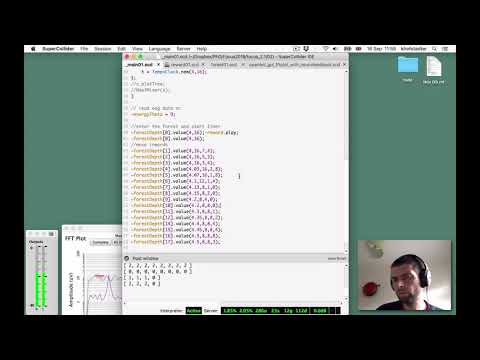
In the video below I demonstrate where I need guidance. When convenient, could people interested in neuro-feedback and/or meditation have a look and send me some feedback please?
I look forward to hearing from you!
Cheers, k
Comments
Dear Kris!
Your system looks perfect, but I could note, that from conceptual point of view, it is a bit outdated idea, that mere elevation of theta power is a reliable way toward meditative state.
Surface EEG theta has a lot of sources inside brain, and in general, it corresponds to local cortical decreased brain blood flow and metabolism.
That is why it is frequently reliable correlate of some focal cortical functional deficit, dysfunctions like epilepsy or state of drowsiness. I don’t think that it’s right target for neurofeedback training.
Some old studies notes existence of transient high theta bursts, as a correlates of meditative state, but it is tricky to establish proper NFB protocol to reinforce such patterns.
See that for example:
https://www.sciencedirect.com/science/article/abs/pii/0013469473901703
Anyway, eeg correlates of meditation are much more complex than simple integral power metrics like theta or alpha.
Best regards,
Alex
Dear Alex,
Many thanks for your positive reply, constructive feedback and the link to the paper.
Another issue I was told with using theta in neuro-feedback is, that muscle movements (jaw, eye blinks) can contaminate this bandwidth (4-8hz). So some people might associate rewards with these muscle movements, which is not good.
Are you aware of the NeuroMeditation protocols? With this shamanic drumming soundscape I think the idea is to move the participant to perhaps first in a mindfulness state [Mindfulness NeuroMeditation] and from there in a deeper perhaps trance like state [Quiet Mind NeuroMeditation].
As far as I understand Transcendental Meditation also uses a repetitive stimulus [mantra] to increase the amplitude of the lower [theta] brainwaves.
Another good comment I received:
I need to make sure there is a constant (immediate) response (reward) as well. The most basic idea would be to map the amplitude of the theta wave to perhaps the volume of one of the sound textures. But, I probably will look into programming a subtle change in the drumming, perhaps timbre, a slight change in the rhythm, ...
Many thanks! k
Hi, Kris!
As far as I understand, typical face muscle artifacts mainly effect high beta and above spectrum, i.e. >20 hz, but, yes, periodic jaw movements and eyes blinking sometimes could give effects to lower part of EEG. For persons without severe neurological dysfunctions these artifacts could be avoided by proper prior instructions given to trainee. Those movements can be controlled voluntarily quite easily.
I know at least one person from NeuroMeditation team, Dr. Jeff Tarrant.
I think that currently he quite extensively uses Brainmaster product “Avatar” ( 24-ch amplifier Discovery plus software) for his meditation practice. And it utilizes EEG 3D source localization method, so called “LORETA” class of EEG reverse solutions, but not simple one channel surface EEG power training.
As I personally learned from current literature and studies, “meditation” is a complex (altered) state of consciousness with many regions of brain involved. It should be described in terms of brain network topology and functional interactions between different brain regions.
Please see for refs, as an example:
https://www.frontiersin.org/articles/10.3389/fnins.2018.00178/full
It is not just elevated one integral surface EEG metrics like theta, alpha or both, but rather state of altered brain connectivity configuration.
In any case your experiments with sounds as a reward feedback for lower part of spectrum deserve high attention and could give us more understanding of nature of meditative states.
Best regards,
Alex
Jeff Tarrant DOES do surface EEG / low channel number training. See the Youtube presentations on this thread,
http://openbci.com/forum/index.php?p=/discussion/1829/attention-vs-meditation-alternative-neurosky-mindwave
Granted, he likely uses his Discovery system for client trainings in his office. But he also trains other practitioners to do the various Neuromeditation protocols with their own equipment; which can be less than 19 channels.
Regards, William
Dear William,
Thank you for your comment and clarifying information!
Frankly speaking, I’m not an expert in the field of meditative practices.
For me “meditation” is a quite proper term for just aimless sitting on a sofa with glass of good ale and listening to ambient sounds.
I only worry a little bit about possible oversimplification of neurofeedback methodology, that already has discredited this really great tool amidst clinicians and conventional scientists in 70s and 80s.
Thank you again and best regards,
Alex
Many thanks Alex and William,
Yes, there are protocols from Jeff available for both, 2 channel surface and S LORETA:
[ from 26:13 min ]
After yours and other people's feedback I am now considering having a less 'goal' oriented system. Perhaps what I need to build is a passive/implicit BCI instead of what I think most NF is, active/explicit BCI. The idea of 'rewarding' the user (meditator) does not feel right with the idea of what I think meditation often requires: letting go, not asking for a 'reward' ...
Then, the project might become less neuro-feedback and more sonification/musification. But at least I could end up with a bunch of data to analyse for correlations between EEG and music, which I could feed back into a more neuro-feedback focused version of the project.
Alex, could you please refer me to 'decent' knowledge on current neuro-feedback methodology? Can I consider the following books sound?
Many thanks! k
// good ale and sofa combo sounds too tempting at the end of some days
Hi, Kris!
I like the way you set key points for your project: eeg sonification. It can grab not only average main power characteristics, but their dynamics as well. If you can record brain sounds of recognized meditation expert during meditation session, then any novice can further try to reproduce this “tune” by his/her own.
In any case, this sound is a feedback to the brain and inevitably will serve as a guide.
Your list of literature is great and covers all necessary technical details for doing proper nfb.
Maybe I would like to add to this list one more book:
Z-score Neurofeedback: Clinical Applications
By editors Robert W. Thatcher, Joel F. Lubar.
Those two men are founding fathers of modern NFB paradigm.
Under “proper NFB methodology” I mean strong reliance on modern neuroscience findings, correct math and logic.
I would recommend any good book on functional neuroanatomy and brain connectomics.
Many new and seminal studies emphasize great importance of functional connectivity over local activity of brain regions.
Connections are more important than local activity.
Functional network patterns are key points for brain dynamics.
EEG coherence, cross/frequency coupling are more important metrics and more informative than old and classic power metrics.
OpenBCI boards technically gives great opportunity to correctly measure and possibly to train by NFB these connectivity metrics. The main issue is a software, that will provide this opportunity.
Warmest regards,
Alex
I think gamma (around 40 Hz) may be more related to meditation (and perhaps to breathing rate) whereas slow activity has more to do with sleep: https://en.wikipedia.org/wiki/Gamma_wave#Relation_to_meditation
Hi @Billh!
Yes, gamma spectrum is a very promising target for experiments, but it’s necessary to note that surface scalp EEG in this spectrum is very contaminated by tonic activity of scalp and neck muscles and even sporadic microsaccades. Moreover, there are some studies that state technical impossibility to measure “true” gamma brain activity from the scalp noninvasively due to strong attenuation of this spectrum by skull and meningeal tissues.
So, it is high probability that some practitioner instead of “true gamma” will be playing with EMG and eye movements.
Best regards,
Alex
Thanks Alex and Billh,
Yes, this is a very good idea. I have a few meditation centres around here, I hope to find some skills
Thanks for adding
Z-score Neurofeedback: Clinical Applicationsbook to the list.Yes. This should not be too difficult to implement later in the software. But for now, the deadline only allows me to focus on using the old/classic metrics. I guess I just need to make sure I state that I am aware of the state of the art and I have plans to investigate later.
When convenient, could you please refer me to these studies?
Many thanks, very useful feedback.
Cheers, k
Hi, Kris!
I’ll do my best to find those articles in the next few days, but right now you can take a look at this open access study, dealing with these technical difficulties of non-invasive registration of high part of the EEG spectrum:
https://www.frontiersin.org/articles/10.3389/fnhum.2013.00138/full
It is very non trivial task to correctly register high frequency spectrum of cerebral activity from the scalp.
Best regards,
Alex
In addition:
https://www.sciencedirect.com/science/article/abs/pii/S1388245707001988
Scalp electrical recording during paralysis: Quantitative evidence that EEG frequencies above 20 Hz are contaminated by EMG
More info from EEG gurus:
https://www.ncbi.nlm.nih.gov/pmc/articles/PMC2998274/?report=reader
Scale and frequency chauvinism in brain dynamics: too much emphasis on gamma band oscillations
I hate to be a sort of dream destroyer, but here is another study about possible EMG sources for surface EEG gamma:
https://www.sciencedirect.com/science/article/abs/pii/S138824570800045X
Thinking activates EMG in scalp electrical recordings
https://www.hindawi.com/journals/cin/2018/1638097/
High-Frequency Oscillations in the Scalp Electroencephalogram: Mission Impossible without Computational Intelligence
I think that the best place to measure gamma in scalp EEG is at the edge of the beta, at 20 to 40 Hz, because of the EMG issue. The gist of most of your references is of the impracticality of detecting with scalp electrodes the very high frequency bursts seen on intracranial recordings in focal epilepsy.
Furthermore, the reliability of the of EEG measures may not matter to the practitioner. It's likely that the relaxation training benefit of EEG based biofeedback and related meditation is of much greater relevance to clinical outcome than the nature of the processed scalp signals.
Bill, Alex, Kris, thanks for this thread and comments.
Using only scalp QEEG (not 3D voxel sLoreta), Neuroguide and other QEEG packages enable computing coherence measures across points on the scalp in various frequency bands (down to 1 Hz bins). So while measuring scalp gamma amplitude (alone in isolation) has indeed been shown to contain some EMG contamination -- coherence / synchrony measures may provide a more accurate assessment of scalp gamma presence. Think about it, separate muscle groups under the scalp are not going to be vibrating in synchrony across widely spaced sites.
EEG gamma coherence and other correlates of subjective reports during ayahuasca experiences.
https://www.ncbi.nlm.nih.gov/pubmed/16149330
https://www.google.com/search?q=qeeg+gamma+coherence
Best regards, William
Hello Alex, Bill and William,
thanks for all your responses.
Due to close deadlines I needed to start testing with the current system which cannot do 3D voxel sLoreta acquisition nor real-time coherence measurements. I made the neuro-feedback part very minimal (probably more passive BCI than active):
Here the last bounce to give you an idea about the narrative:
I am recording 8 channels (FZ, PZ,FP1, FP2, F3, F4, P3, P5) and cues for the music part in a file. One line:
166, 12138.29, -2512.36, 15472.53, 10792.03, 10417.12, 10417.72, 7273.68, 4933.1, 0.016, 0.046, -0.998, 1.8, 0.2, 13, [ 53, 16, 1, 0 ], 12:04:26.237, 1569582266237
// basically adding some columns to the 'normal' openbci format;
These files I will try to analyse/plot in SuperCollider or Matlab.
The idea now is to gather more data by testing with more people including advanced meditators. Then, based on findings I will refine the music part with involving real-time coherence measures based on your suggestions above. Would be good to implement sLoreta as well. Fredrik [ https://www.fredrikolofsson.com/ ] and I are very interested in developing this further.
I tested with two people so far and myself. My 'shamanic journeying' was deep (need to analyse the EEG), the other people have never done anything like this before, so I think for them it is more challenging to still the mind in this 'unusual setting'. But, they 'saw' some things too, which I asked them to draw and note down in the post session questionnaire.
I also plan to give them a sound recording of the session to meditate with in-between sessions. I think there should be 5 sessions with each participant at least.
So, very exciting times at the moment, but I am aware that the system needs to be more sophisticated for meditation tests in the future.
Thanks for all your help, appreciated, k
hello!
coherence related programming question:
In SuperCollider I have 8 floats going up and down representing theta medians for FZ, PZ, FP1, FP2, F3, F4, P3, P4.

With my basic DSP skills I could calculate the difference between the 8 floats:
This is real-time calculation, updated 0.1/sec.
Can these values represent meaningful coherence between the channels?
I am currently looking into in programming a function that can see phase coherence between these channels.
Cheers, k
Besides the traditional EEG use of 'coherence' between channels, some protocols instead use the easier concept of just 'synchrony'. In synchrony neurofeedback protocols I'm aware of, for example, the channels to be compared are first bandpass filtered, then summed. Taking the absolute value after the sum, say with a running average as well, gives you a rough idea of the synchrony between channels.
Since the two DSP operations: filter and sum, 'should' be invariant as to order of application -- it's also possible to just sum the channels first, then bandpass, abs value, running average.
This synchrony measure is not as accurate or widely used as official 'coherence' metrics. But has been used in a wide variety of protocols such as Les Fehmi's Open Focus, and some of the synchrony protocols in Pete Van Deusen's Brain-Trainer suite.
Here's a paper I pulled up,
https://www.ncbi.nlm.nih.gov/pubmed/22361266
From this search,
https://www.google.com/search?q=eeg+synchrony+vs+coherence
Regards, William
Here's Pete's discussion,
https://brain-trainer.com/answers/getting-started/coherence-synchrony/
Just to clarify, the reason the 'summing' operation between channels that are compared works, is that waveforms OUT of sync will cancel each other. Whereas IN SYNC waveforms will get stronger.
In addition to William’s materials I would like to add reference to this tutorial:
https://www.appliedneuroscience.com/PDFs/Brain_Connectivity-A_Tutorial.pdf
Someone, who is willing to play with functional coupling metrics, whatever it could be, should keep in mind that it is primarily phases relation, not amplitudes.
It is like music, played loudly and faintly. Despite’s different amplitudes it is identical signal in phase space. “Zero lag coherence”, as they say
Best regards,
Alex
Not bad idea for “DSP on a budget”, let me name it so, but it is very inderect measure, and, possibly, severely suffers at least from “volume conduction effect”
Alex, that's why it is called a "synchrony" measure instead of the more complex "coherence". Both have application, as can be seen from the work of Les Fehmi and Pete Van Deusen and others. Recall that even surface QEEG differs from Loreta QEEG with regards to volume conduction; yet both have value because of their normative databases.
William, in general I agree with you, that any reasonably integral characteristic of biophysical signals has its rights for analysis and NFB training. I’m not fanatic of highly elaborated methods of EEG analysis and do believe that even simple surface EEG metrics have still powerful potential for further research.
But we should understand physiological meanings of such integral metrics and limits of their application.
Truly, any NFB intervention has targets to change underlying physiology in desirable direction ( toward norms, for example) , not just numbers.
As just one example, Les Fehmi's Open Focus 5 channel alpha synchrony trainings have been going on in Princeton, New Jersey for decades. Attached a copy of his Journal of Neurotherapy paper from 2001. They use a special purpose 5 channel EEG device that is actually analog electronics, not digital(!) It sums and integrates the channels with audio and visual feedback. Site locations used are Cz, Fpz, Oz, T3, T4; with a saline based velcro headset.
http://openfocus.com/file/WorkshopBrochure.pdf
https://openfocus.com/
https://www.google.com/search?q=les+fehmi
@wjcroft Thanks for sharing about openFocus!
Maybe it's time to add a more advanced Focus algorithm to the GUI as an option?
Open Focus is a specialized form of attention training. Where you SIMULTANEOUSLY hold an awareness of the larger field around you. A holistic perception of the wider environment. And can at the same time keep this attention active while you are narrow focused on a task.
In neuroscience terms it is activating two brain networks: the dorsal attention system, and the ventral. Les Fehmi's discovery of the alpha synchrony effects are one access point to this combined attention awareness. But there may be others that have even more neuroscience validation.
In general, when most people consider 'focus', they are referring to the narrow focus dorsal attention system.
https://www.ncbi.nlm.nih.gov/pmc/articles/PMC4107817/
Dorsal and Ventral Attention Systems: Distinct Neural Circuits but Collaborative Roles
hi All, many thanks for your replies.
I am still digesting as there is a lot to learn. So far, Pete's discussion (https://brain-trainer.com/answers/getting-started/coherence-synchrony/) I found enlightening!
Programming wise, it should not be difficult to
1. sum two channels' theta median;
2. make it absolute;
to see phase synchronisation. Will try P3-P4 and F3-F4, perhaps FP1-FP2 asap.
"A great analogy for understanding the difference between when to use coherence or phase synchrony analysis is Soldiers marching in a parade: phase synchrony is used to determine how synchronized their feet are marching in unison in a few steps, while coherence is used to see how synchronous their feet were marching in unison over the entire parade route." source
My understanding of this is that coherence indicates how phase synchrony change over a longer period of time, but I might just read a bit more to get a better picture.
Many thanks, k