
EEG signal to noise ratio vs fNIRS
 Scipio
Nigeria
Scipio
Nigeria
@wjcroft Hi. I am still digesting the material you supplied regarding long-term EEG studies.
Lately, I watched a video concerning one of the latest wearable brain activity monitoring devices
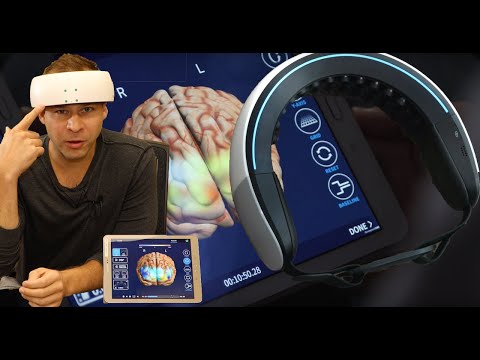
One of the things that emerges from this video is a major drawback of EEG systems in general which is the relatively high noise to signal ratio. This is of particular concern to me because in proving my theories, I really need the purest of signals and the difficulty of attaining this goal with conventional EEG techniques is obvious even when using the EC2/EC3 Grass electrode paste.
If one is really in need of the highest purity of EEG signals, it would actually mean playing a waiting game until EEG technology undergoes a revolutionary breakthrough like that seen in the above-cited video.
Comments
Thanks. I viewed that video last week as well. Really excellent work Dr. Cody Rall is doing.
By the way on the comments section of that video, he remarked about the pricing of the fNIRS device shown,
“Tens of Thousands unfortunately. It’s because they don’t have as much demand for their supply as they theoretically could. If there was higher demand for the neurofeedback community, I think cost would come way down. I’ll have a video coming out on it soon.”
Each type of brain monitoring device has it's own unique pluses and minuses. All have to have ways of dealing with noise levels.
Pulse oximeters, which use similar technology, are very inexpensive. So prices would go down if there was any high volume production.
Blood flow is only indirectly and partially correlated with what the brain is doing, of course, so the technique is inherently limited in many respects.
This new generation of HEG neurofeedback headbands, is only $50, and is complete open source.
https://www.crowdsupply.com/alaskit/hegduino
I know the engineer / founder, Josh Brewster. And have an early alpha version. Full release in January.
fNIRS, pulse oximeters, and HEG, are all using the same basic principles. Just deployed differently. fNIRS will likely remain a pricey clinical research device.
'fNIRS' acronym was patterned after the similarity to 'fMRI'. With the premise being that fNIRS could emulate some of the types of BOLD (blood oxygenation level) data obtained from fMRI. But this is unlikely, as fNIRS only senses near surface cortex. Whereas fMRI has full 3D penetration.
@wjcroft Are there ways, on OpenBCI, of completely ridding EEG data/signals recorded on micro SD cards of unwanted noise?
All biosignals have noise. Signal processing is always done to separate the inherent noise from signal you are interested in tracking. The statement in the fNIRS Youtube video that fNIRS is superior to EEG, because EEG has "more noise" is marketing speak nonsense.
What are you hoping to detect with your EEG hospital sleep study? PSG is widely used in clinical settings with success.
https://www.google.com/search?q=polysomnography
@wjcroft What I am hoping to detect with my EEG hospital study will have to wait until I can confirm my expected findings which, when published, will need to be replicated by others to prove my hypotheses.
"until I can confirm my expected findings", it would then seem that you need to do some smaller self experiments with EEG to look for the phenomena you expect and refine your theoretical framework.
https://www.google.com/search?q=experimental+method
It seems clear that small scale self (or friend) experiments would always precede taking your gear into the more difficult hospital setting.