Updated on January the 3rd 2026
New year, new me – but the same project, now with some very exciting news to share!
Since my last post, I’ve continued working on the project, mainly focusing on polishing and refining different aspects of the system. But more importantly, I had the incredible opportunity to travel to the South American Championships in Science (MOSTRATEC) in Rio Grande do Sul, Brazil, where I competed alongside approximately 1,000 science projects across a wide range of categories.
During the event, I experienced Brazilian culture firsthand and presented my project countless times, primarily in English, but also in Spanish, and even some very broken German! I spoke with people from all over the world, and my booth was constantly full of visitors. For almost three days straight, I talked non-stop about the project, and in the end, it truly paid off.
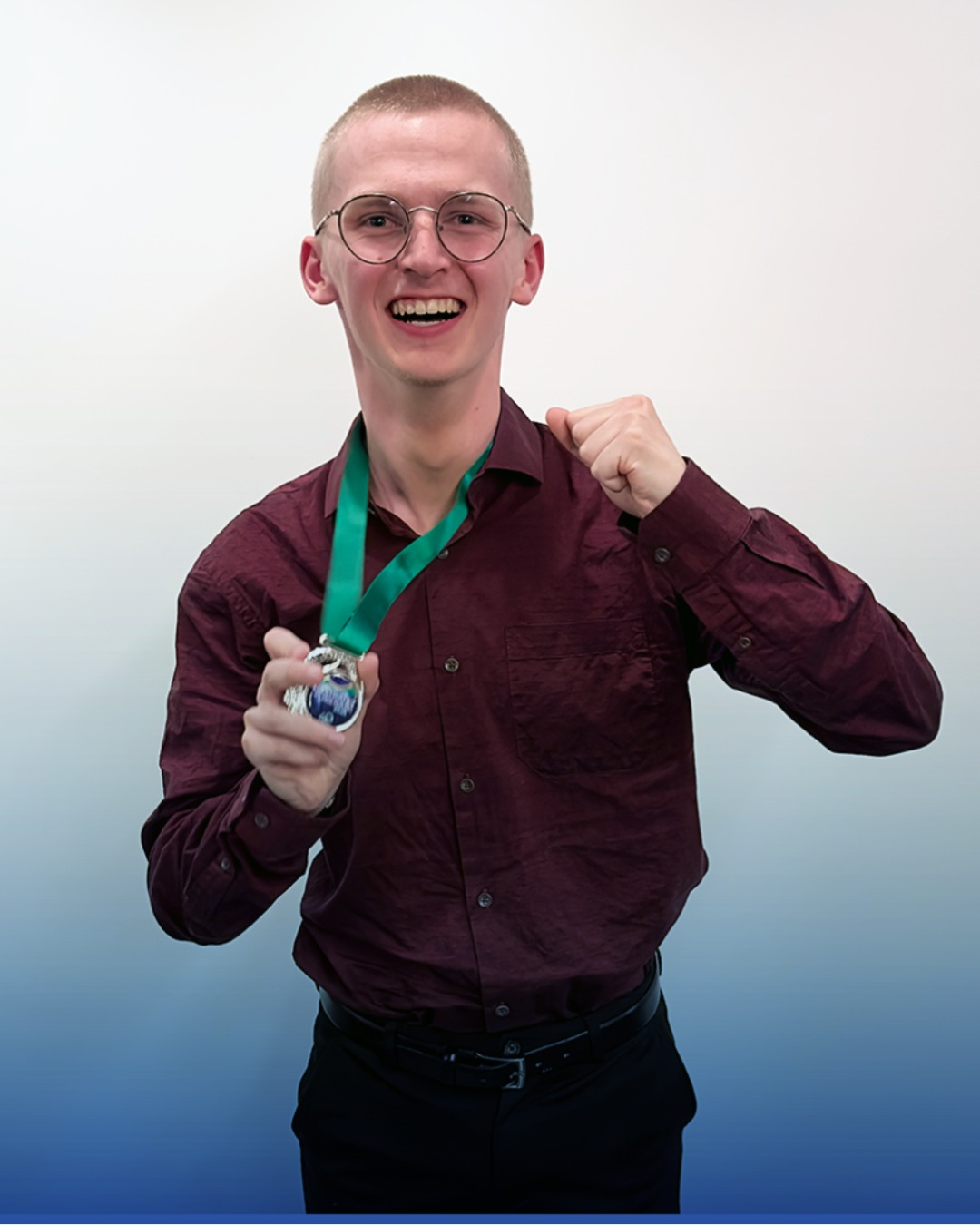
I was incredibly fortunate to be awarded 2nd Prize (Silver Medal) at MOSTRATEC, which still feels unreal to this day. Fun fact: I am the first and only Dane to ever win a silver medal at MOSTRATEC, and it is the best result Denmark has ever achieved at the competition. Not too bad!
Beyond traveling and taking a short break from the project, I’ve also expanded my network significantly. From January 31st to April 30th, I will be participating in FR8, the world’s first-ever hacker hotel, startup incubator, and research lab, based in Helsinki, Finland. FR8 has generously donated all the necessary hardware to further develop my project (a new robotic arm, providing 3D-printing accessibility, Microboards, improved EEG-hardware and much more) and will provide mentorship from experts in the neurotechnology field, along with continuous support throughout the program.
I’m really excited and deeply grateful for this opportunity, and I can’t wait to share how far the project has progressed in my next update – after my time in Finland.
This might just be the beginning… but what an exciting beginning it is!
Updated on September the 28th 2025
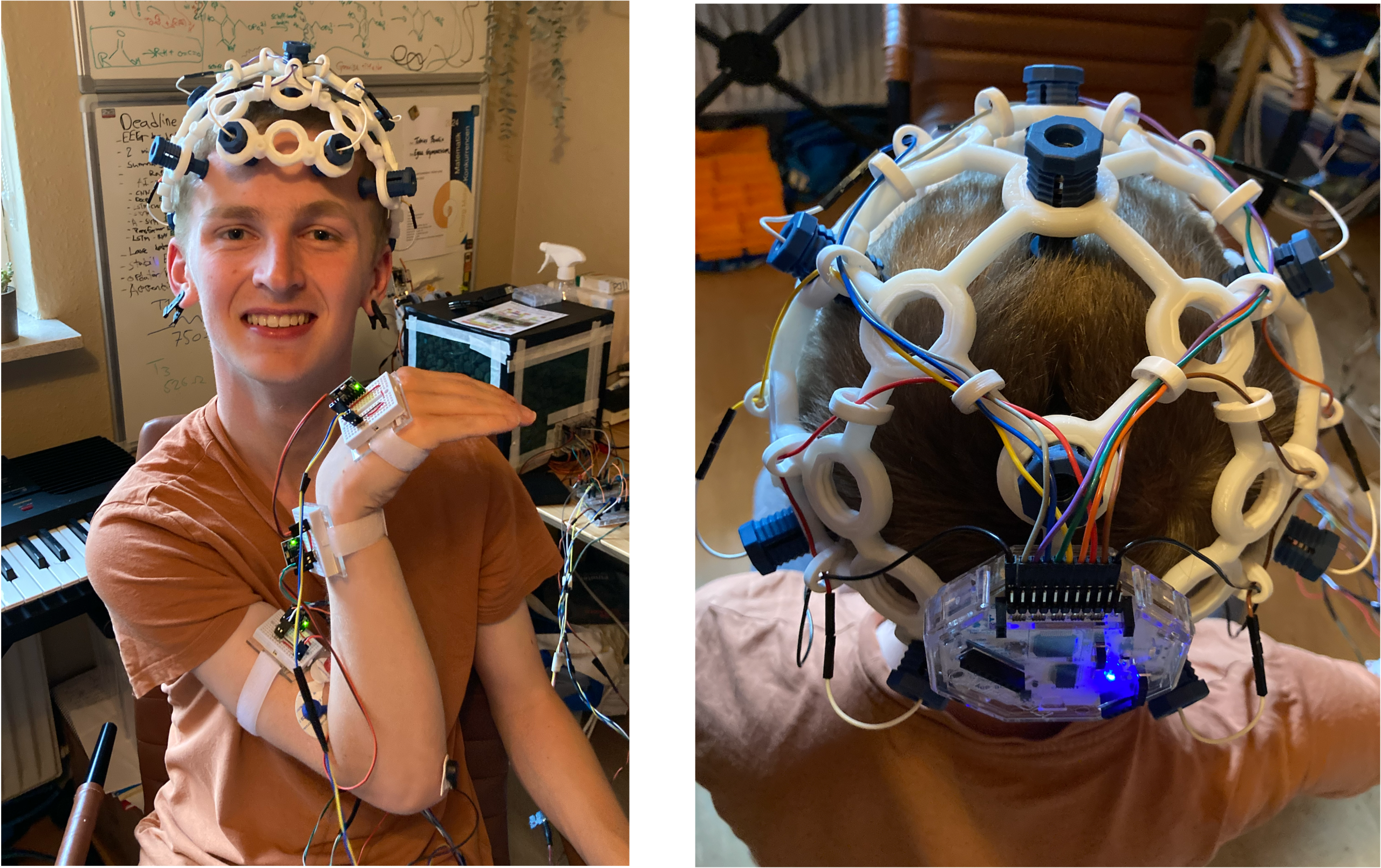
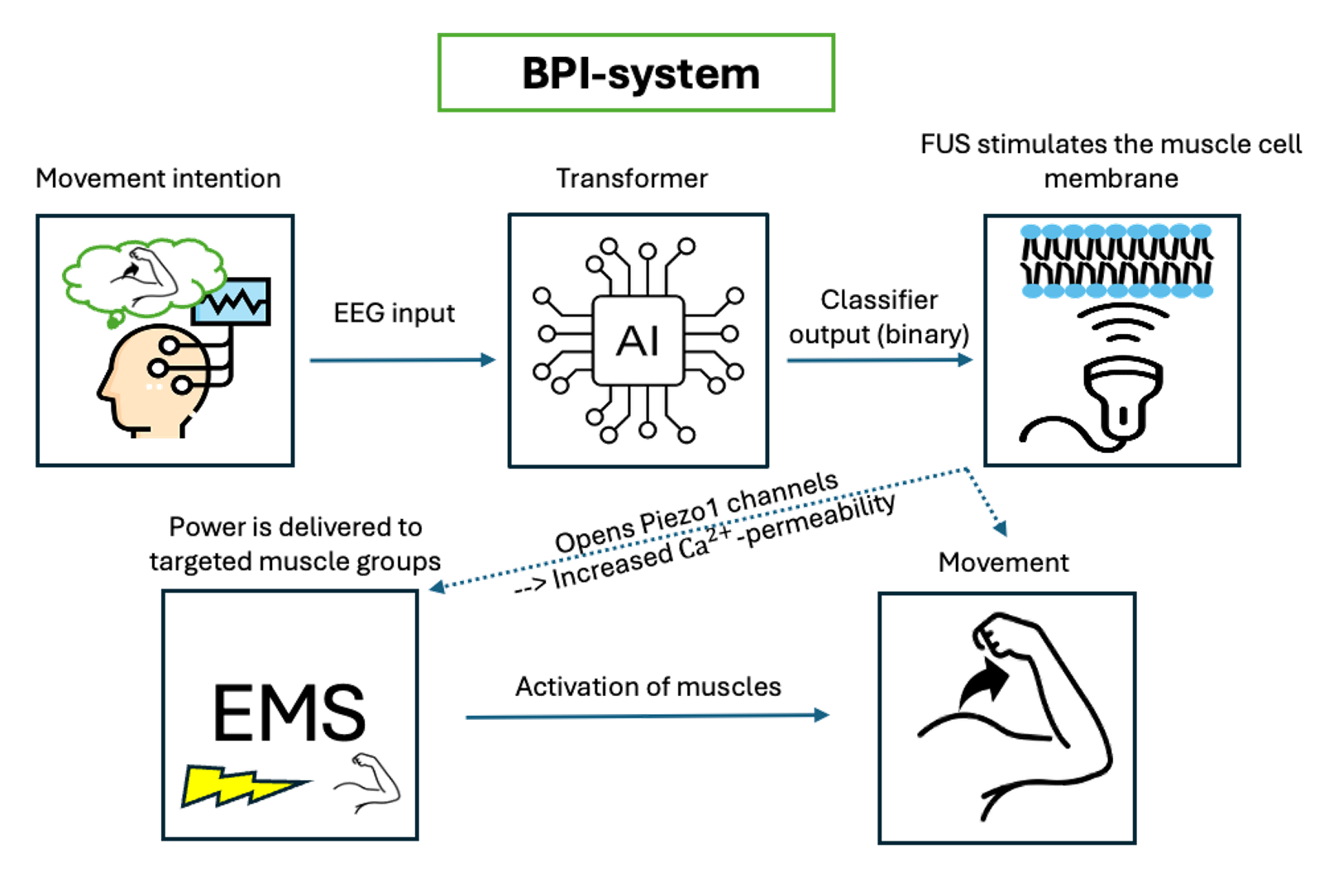
It’s now been 3 months since my last post and much has happened since then. I’ve participated at London International Youth Science Forum, where I was chosen as one of 13 out of 200 to present my project in front of the 500 participants. Besides that, I’ve been to EUCYS where I got much feedback and new ideas on the project! I also managed to demonstrate an early prototype of the project, where by using just my alpha-activity I was able to activate or deactivate a robotic arm that I built – demonstrating a very early phase of ones thoughts to movement I’ve begun during trials on my own body and am currently in the stage of detecting Bereitschaftspotential in my own measured EEG-data, which has acquired doing training sessions with 3 IMU’s placed on my arm and EMG-electrodes on biceps to identify movement onset. Through ICA, FIR-filter, Notchpass, Bandpass and Z-normalisation in MATLAB I am on the bring of major breakthrough: identifying BP’s and being able to distguinish between these using my Transformer-model. When I achieve this milestone, I’ll start up the next step of the project: reactivating muscles using Focused Ultrasound (FUS) and Electrical Muscle Stimulation (EMS), in an unified system (which has never been done before), called “Brain Physiological Interface” or BPI for short. The idea can be seen on the figure below:
So a lot of work is still to be done, but every day I am coming closer to achieve every single milestone! I’ve also submitted my research paper for the biggest science fair pre-college level in Latin America (Mostratec) and am now for preparing this competition too. The report can be found on this link: Besides the academic work, have i been present in many Danish media too, including: frontpage on the biggest newspaper in Denmark, live on the biggest shows in national TV (twice), contacted by a possible investor, been on national Danish radio (thrice), went viral in Danish media with my project and the main article on the biggest science newsmedia in Denmark. I also presented my project in front 100 people with Parkinson’s disease where I got much praise afterwards of my explaining skills (they actually understood everything about my project!!)
So, I’ve been up to a lot of stuff – but I’m still very much eager to get this project to work and I believe I’m just 2 steps away from acomplishing this goal! Untill next time, have it wonder wonderful 🙂
Updated on June the 19th 2025:
Since my original post, the project has taken a major leap forward and reached a significant milestone: the submission of my written report, appendix, and explanatory video for the EU Contest for Young Scientists (EUCYS) 2025.
You can find all three documents below, along with a 2-minute layman-friendly video presentation:
And the explanatory video: Tobias_EUCYS2025_video
1. What are you making?
Hi! I’m Tobias, a student researcher from Denmark, currently on a gap year between higher secondary school and university. I’ve made a project called “From Thought to Movement”, which is a personalised, assistive neurotechnology designed to help my father, who was diagnosed with Parkinson’s when he was 36 years old, and others affected by similar motor impairments.
The idea behind the project is simple: when we intend to move, our brain emits unique patterns, like Bereitschaftspotential (BP) and Event-Related Desynchronization (ERD), which are measurable in the EEG signal before the actual movement is executed. These signals represent motor intention, and here’s the catch: in Parkinson’s disease, the intention is still intact, but the brain’s internal relay system (especially the basal ganglia) fails to pass that message along to the muscles.
My system captures these intact intention signals using EEG and sends them through a multimodal Transformer-based AI model trained on EEG, EMG, and IMU data, capturing both brain signals, muscle activity, and movement kinematics. The model learns to recognize patterns behind specific movements and predicts intentions in real time.
To demonstrate the concept, I’ve built a 6-axis robotic arm powered by Arduino. When I think of a movement, the system detects the intention in my EEG, feeds it through the trained AI model, and outputs a 4-bit binary code to Arduino. Each code corresponds to a specific robot arm motion. For example: thinking about raising my arm might produce a prediction like 0001, which triggers the robotic arm to lift its forearm. The goal? Thought becomes action.
The next step is to replace the robotic actuator entirely. Instead of moving a robot, I want to stimulate real muscles directly based on brain signals, bypassing the damaged nervous system. I’m currently exploring a hybrid actuator solution using Electrical Muscle Stimulation (EMS) combined with Focused Ultrasound Stimulation (FUS). FUS increases calcium permeability in muscle membranes (via Piezo1 and TRPV4 channels), effectively “priming” the muscle, while EMS delivers the contraction. The AI model would then control real muscles instead of servos, restoring movement from intention to activation.
I’ve made my project using both OpenBCI hardware (Cyton board, EEG headset) and my own self-built EEG system. I look forward to sharing more about my project and would love to hear your thoughts, feedback, or ideas for collaboration, whether technical, clinical, or conceptual!
2. How are OpenBCI tools being applied?
In the early stages of this project, I built my own EEG circuit inspired by Ronan Byrne’s master’s thesis Development of a Low Cost, Open-source, Electroencephalograph-Based Brain-Computer Interface (see: Byrne’s Github). I modified the design to support three active electrodes placed over C3, C4, and Cz regions above the motor cortex, where movement intentions are most detectable in EEG.
While this homemade system worked as a proof-of-concept, it had limitations: the signal quality was noisy, and electrode positioning was inconsistent. I had been using a basic swim cap to hold the electrodes in place, which often led to signal artifacts and electrode drift.
These challenges were solved thanks to OpenBCI’s donation of a Cyton Biosensing Board (8-channel) and a pro-assembled Ultracortex “Mark IV” headset. The combination of high-quality hardware and precise electrode placement significantly improved signal clarity, stability, and reproducibility.
As a first real-world test, I successfully developed a Python-based pipeline that detects alpha activity (>10 μV2/Hz) in real time using the Cyton board. When the alpha power crosses this threshold, when I close my eyes, the signal is sent over serial to a Teensy 4.1 microcontroller, which activates a red LED. This system integrates BrainFlow (Python), real-time band power analysis, and Arduino control.
Moving forward, all real-time EEG data for training and testing my Transformer-model will be acquired using the Cyton and Ultracortex system. OpenBCI has not only improved the technical quality of my measurements, it has made the project more scalable, modular, and clinically relevant.
3. Why is this important?
This project has the potential to redefine motor control by introducing a completely new approach to assistive neurotechnology: bypassing damaged neural pathways using preserved movement intentions decoded from brain signals through AI.
Instead of treating motor impairments as irreversible endpoints, “From Thought to Movement” reframes them as signal routing challenges, ones that can be overcome by identifying and interpreting the brain’s original intentions using advanced machine learning.
I’m also exploring several future directions, including:
– “From Movement to Thought”: a reverse decoding architecture aimed at reconstructing internal cognitive states or intentions based on physical actions and biosignals.
– “Field-Guided Neuronal Alignment”: a novel theoretical framework for enhancing non-invasive EEG by guiding neural signal orientation through magnetic fields, potentially improving signal-to-noise ratios in wearable systems.
– “FUS/EMS Integration”: combining focused ultrasound stimulation (FUS) with electrical muscle stimulation (EMS) to directly activate muscles based on decoded neural intentions, fully bypassing the nervous system in patients with motor disorders.
Together, these innovations aim not only to restore lost function but to build entirely new interfaces between the brain and body, interfaces that are adaptable.
4. Who is involved in this project?
Tobias Bendix Nielsen (myself!): I am the sole developer of “From Thought to Movement”. I independently designed and implemented all core components of the system: from building the EEG hardware and coding the AI models, to integrating the Arduino/Teensy-controlled robotic arm and real-time biosignal pipelines.
While the project is developed independently, I have received invaluable support and feedback from several contributors:
– My former physics teacher played a key role in the early prototyping phase, assisting with the construction of the 6-axis robotic arm and providing continuous feedback on the hardware design.
– Academic sparring has been provided by experts and professors in electrical engineering, biomedical engineering, and neuromodulation, who offered constructive critique on topics ranging from EEG signal acquisition to real-time AI deployment and clinical relevance.
– OpenBCI, whose generous donation of a Cyton Biosensing Board and Ultracortex EEG headset enabled a quantum leap in signal quality and experimental reproducibility.
5. Want to learn more about this project?
Feel free to connect with me or follow the project’s development through the following platforms:
LinkedIn: Tobias Bendix Nielsen
GitHub (full source code): From Thought to Movement
Email: [email protected]
Media coverage (Danish):
TV2 Go’ Morgen Danmark
TV2 Østjylland – Tobias hopes his invention can help his sick father
TV2 Østjylland – “I think my pulse hit 130”
TV2 News (twice), TV2 Echo, TV2, Ude og Hjemme (a newsletter) and Politiken (a newsletter)
Videnskab.dk (His dad is slowly degenerated by horrible disease – Tobias has now deveolped a special invention to help
Ude og Hjemme (newspaper for “non-scientific” people, usually the elderly) – Tobias is a huge researcher talent “I just want to help my father”
Ekstrabladet (the biggest tabloid media, where they just “loaned” the article by Videnskab.dk) – 20-year old inventer build an exoskeleton to his father with Parkinson’s disease
Competitions & recognition:
Unge Forskere 2025 (Denmark) – Finalist Profile
EU Contest for Young Scientists (EUCYS) 2025 – Official site
Mostratec 2025 (Brazil) – International science fair
London International Youth Science Forum (LIYSF) – International science forum in London
While this homemade system worked as a proof-of-concept, it had limitations: the signal quality was noisy, and electrode positioning was inconsistent. I had been using a basic swim cap to hold the electrodes in place, which often led to signal artifacts and electrode drift. These challenges were solved thanks to Open BCI’s donation of a Cyton Biosensing Board (8-channel) and a pro-assembled Ultracortex “Mark IV” headset. The combination of high-quality hardware and precise electrode placement significantly improved signal clarity, stability, and reproducibility. As a first real-world test, I successfully developed a Python-based pipeline that detects alpha activity (>10 μV2/Hz) in real time using the Cyton board. When the alpha power crosses this threshold, when I close my eyes, the signal is sent over serial to a Teensy 4.1 microcontroller, which activates
https://human-benchmark.org/
Really inspiring progress, Tobias — especially moving from the alpha-threshold demo to BP/ERD intention decoding with a multimodal Transformer.
Quick question: what labeling strategy are you using for movement onset when aligning EEG with EMG/IMU (e.g., EMG thresholding vs IMU kinematics), and what window length works best for BP in your setup?
Also curious if you plan to share any sample datasets or code snippets for the preprocessing pipeline (ICA/FIR/notch/bandpass + normalization).
https://humanbenchmark.me/