Epilepsy affects over 50 million people worldwide, including around 6 million in Europe, a figure that corresponds to the number of diabetes patients. In around 30% of those affected, none of the current treatment methods work, which is why they have to live with recurring seizures. The symptoms vary greatly from person to person, ranging from brief interruptions to loss of consciousness to severe seizures.
People with epileptic seizures are not allowed to drive, which severely restricts their mobility. In addition, the fear of having a seizure in public leads many people to withdraw from social life – almost one in five people affected avoid physical activity completely. Yet exercise, especially cycling, is not only safe for many, but is even recommended. In a region where up to 66% of people regularly travel by bike and almost half of urban traffic is cycling, this fear becomes a significant barrier to independence and quality of life.
Epileptic seizures occur in the brain and can be recorded using an EEG. In everyday life, however, wearing an EEG device is very impractical and is usually not accepted by patients. When cycling, however, a helmet is part of the basic equipment anyway, which opens up the possibility of combining EEG measurement technology with a protective helmet.
Our solution enables people with epilepsy to move more safely and freely, regain their self-confidence and organise their lives in a self-determined way.
1. What are we making?
Our project involves creating an intelligent bicycle helmet equipped with a discreet seizure warning system for epilepsy patients.
The helmet consists of an inner and an outer shell, which together offer protection and functionality.
The inner shell contains a dry EEG system that can be positioned easily, comfortably and stably on the head. The electronics, including a microprocessor for pre-processing the data, a Bluetooth module and a rechargeable battery, are built into the back of the head. LEDs around the helmet and a loudspeaker are also integrated.
The outer shell fulfils the classic protective function of a helmet in the event of a fall. At the same time, it conceals the inner technology (with the exception of the LEDs) and thus protects the user’s privacy.
The helmet is connected to a smartphone app via Bluetooth. There, a machine learning algorithm analyses the EEG data to detect epileptic seizures. As seizures vary greatly from person to person, three functions can be flexibly configured:
1. Warning the patient
2. Alerting a contact Person
3. Warning the immediate surroundings
2. How are OpenBCI tools being applied?
We utilize the EEG device to demonstrate its integration within a helmet. Our objective is to measure EEG data from individuals with epilepsy while they are cycling. We aim to show that the setup process is simple, the device is comfortable and unobtrusive, and it generates reliable, high-quality EEG signals that can be used to detect seizures. To achieve this, we are developing a signal processing chain based on the EEG cycling helmet, along with a seizure detection algorithm.
4. The Prototype
Let’s examine the technical implementation of the system in more detail. It comprises two
main components: the Cycling Helmet and the Smartphone App. The helmet is equipped
with the Cyton Board, which uses dry electrodes, as well as an alarm system featuring a speaker
and LEDs. The Helmet connects to the smartphone via Bluetooth for communication.
The system functions as follows: Electrodes capture brainwaves and transmit the signals
to the EEG device. The EEG device amplifies and converts these signals, which are then
sent via Bluetooth Low Energy to the EPIONE App. The app processes the data, filtering
out artifacts caused by blinking, chewing, muscle movements, and electrode displacement,
as well as electromagnetic interference. After this processing, a machine learning algorithm
detects the onset of a seizure in real-time.
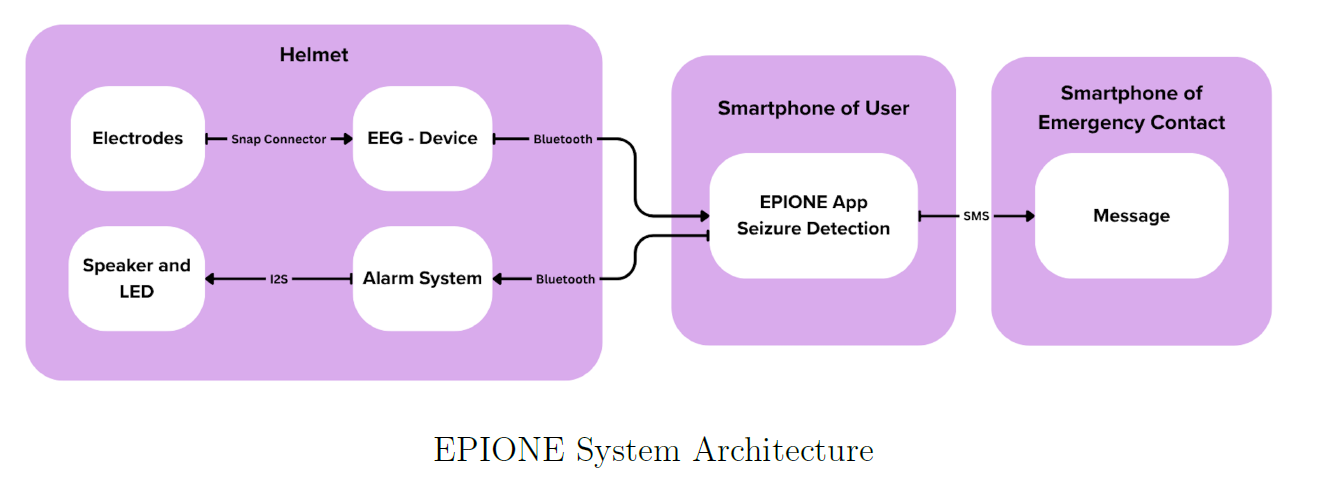
When a seizure is detected, the alarm system activates automatically. A designated contact
person receives a notification via SMS, and the alarm system in the helmet is triggered.
Depending on the settings, the surrounding area may also be alerted through LEDs and a
speaker, and the patient will be informed as well.
4. Our Awards
We have received two awards for our idea and work. First, we were honored with the “Gründungsideenpreis Pfiffikus” from the University of Freiburg. Second, we achieved first place in the Studentencompetition COSIMA organized by VDE. Both awards have provided us with financial support, access to valuable networks, and infrastructure. We plan to continue participating in the international ICanx competition.
5. Who is involved in this project?
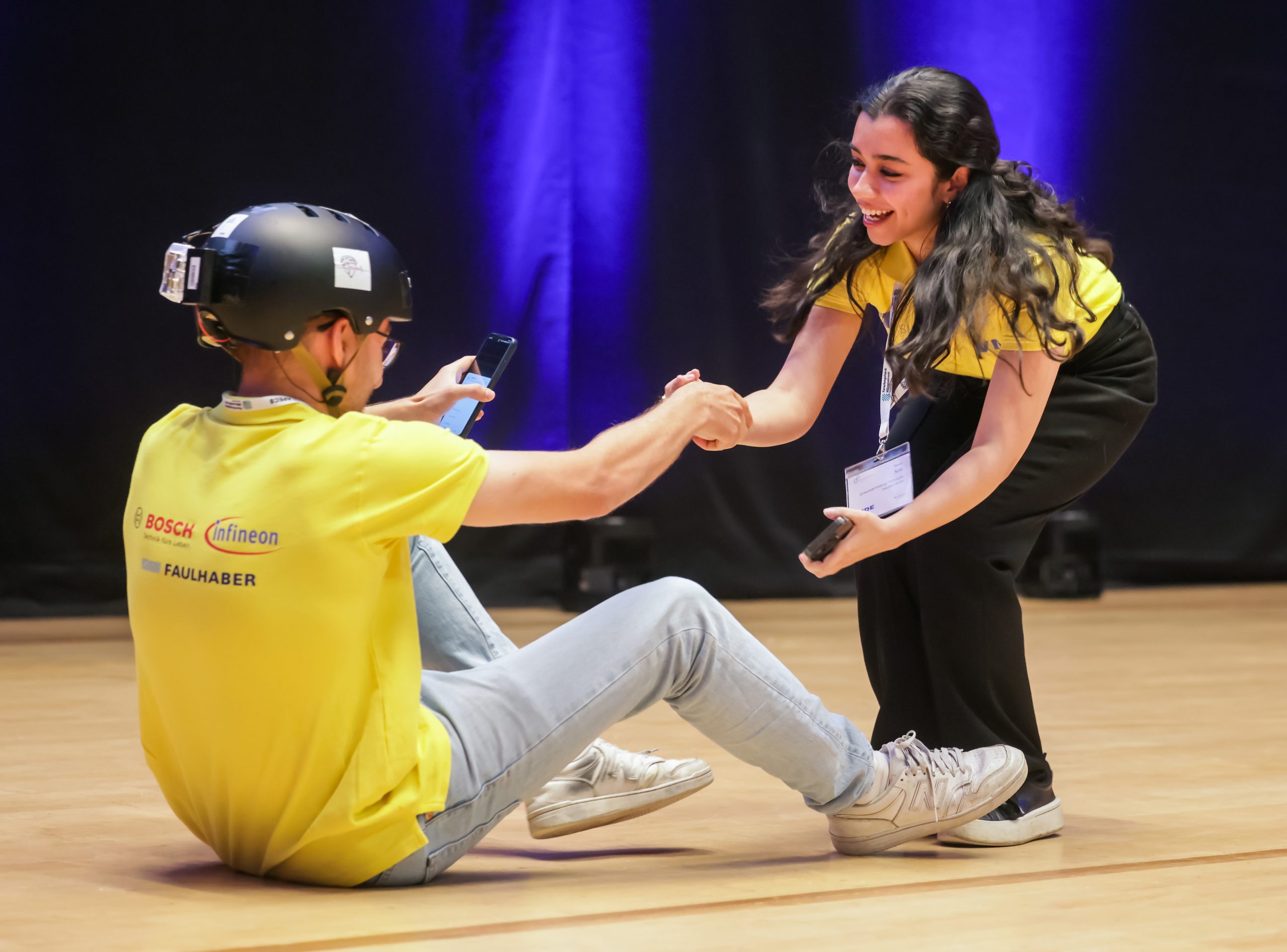
We are a group of four master’s students at the University of Freiburg. Our project started as part of the Embedded Computing Entrepreneurship seminar led by Prof. Oliver Amft and Dr. Mario Cypko. We are now receiving support from the Hahn-Schickard Institute and the Epilepsie Center in Freiburg. Our project continues in multiple master’s theses.
6. Where you can find us
If you want to know more about us, you can find us on Instagram, Facebook, LinkedIn, and our Webpage. There are also a lot of articles about us. Try EPIONE Freiburg in your Favourite Search Engine, and you will find us 🙂
Instagram
Leave a Reply
You must be logged in to post a comment.